


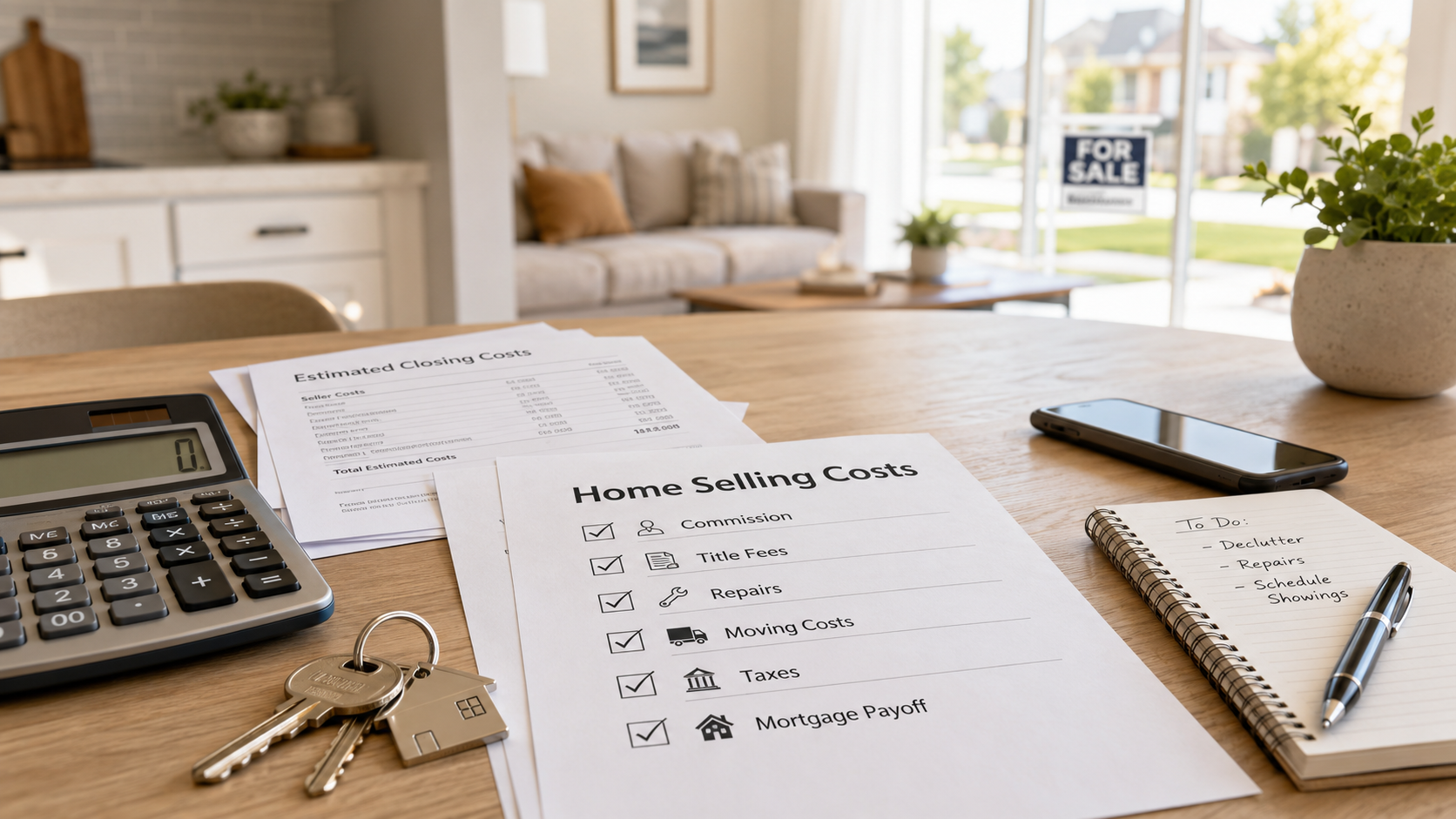
How Much Does It Cost to Sell a House in Amarillo, Texas?
Before you sell your home, it is natural to wonder one thing first:
How much is this actually going to cost me?
Selling a house in Amarillo can be a great opportunity, especially if you have built equity, but it is important to understand the expenses that may come out of your sale. Some costs are predictable. Some depend on the contract. Some depend on the condition of your home. Others depend on your payoff, your timeline, and what you negotiate with the buyer.
There is not one single answer that applies to every seller.
But there are common costs most Amarillo homeowners should know about before listing.
Here is a breakdown of what may affect your bottom line when selling your home.
1. Your Mortgage Payoff
For many sellers, the biggest amount paid at closing is not really a “selling cost.” It is the payoff of the mortgage.
If you still owe money on your home, that loan will usually be paid off at closing from the sale proceeds.
For example, if your home sells for a certain amount, your mortgage payoff is deducted before you receive your net proceeds.
Your payoff may include:
- Remaining loan balance
- Interest through the payoff date
- Any applicable fees from your lender
- Possible escrow adjustments
This is why your home’s sales price and your actual profit are not the same thing.
Before selling, it helps to have a realistic idea of your mortgage payoff so you can better estimate your net proceeds.
2. Title Company and Closing Costs
When you sell a home, the title company handles the closing and helps make sure the transfer of ownership is completed properly.
Seller closing costs can vary depending on the transaction, but they may include items such as:
- Title company fees
- Document preparation fees
- Recording-related fees
- Tax prorations
- HOA transfer fees, if applicable
- Payoff processing fees
- Courier or wire fees
- Other settlement charges
Every transaction is different, so the exact numbers can vary.
A title company can provide a more detailed estimate once there is a contract, but it is smart to talk through expected costs before listing so there are fewer surprises later.
3. Owner’s Title Policy
In many Texas residential transactions, the seller often pays for the owner’s title policy, unless otherwise negotiated.
The title policy helps protect the buyer’s ownership interest in the property. The cost is based on the sales price and is usually shown on the closing statement.
This can be one of the larger seller closing costs, so it is important to account for it when estimating your net proceeds.
Like many parts of a real estate contract, who pays for what can be negotiated, but sellers should understand this cost before they list.
4. Real Estate Commission
Real estate commission is another major cost sellers usually consider.
Commission is not a fixed amount and can vary based on the listing agreement, the services provided, and what is negotiated between the seller and the brokerage.
When you hire a REALTOR® to sell your home, you are not just paying for someone to put a sign in the yard. You are hiring someone to help with pricing strategy, preparation, marketing, communication, negotiation, contract management, deadlines, repair negotiations, appraisal issues, title coordination, and getting the transaction to closing.
Before signing a listing agreement, ask what services are included and how compensation is structured so you understand the full picture.
5. Buyer Closing Cost Assistance
Sometimes buyers ask the seller to help pay part of their closing costs.
This is called seller concessions or seller-paid closing costs.
For example, a buyer may offer a certain price but ask the seller to contribute money toward the buyer’s closing expenses. This can help the buyer purchase the home, but it also affects the seller’s net proceeds.
Seller concessions are negotiable.
Whether it makes sense to agree depends on the offer, the price, the strength of the buyer, your timeline, and the overall market conditions.
The highest offer is not always the best offer if the terms reduce your net proceeds or create more risk.
6. Repairs Before Listing
Some sellers spend money before their home ever goes on the market.
This may include:
- Cleaning
- Decluttering
- Yard work
- Touch-up paint
- Carpet cleaning
- Minor repairs
- Light fixture updates
- Window cleaning
- Junk removal
- Staging or light decor updates
Not every home needs a long repair list.
In fact, some projects are not worth doing before selling.
The key is knowing which items may help your home show better and which ones are unlikely to bring a strong return. A good listing strategy should help you decide what is worth addressing before photos and what may not matter as much.
7. Repairs After Inspection
Even if you do not make repairs before listing, repairs may come up after the buyer has inspections.
A buyer may ask for repairs, a price reduction, a credit, or another concession based on the inspection report.
This does not mean you automatically have to agree to everything.
Inspection negotiations are part of the process. The right response depends on the condition of the home, the buyer’s request, the contract terms, and how strong the overall deal is.
Common repair-related items may include:
- HVAC concerns
- Plumbing issues
- Electrical items
- Roof concerns
- Water heater issues
- Foundation questions
- Safety items
- Wood rot or exterior repairs
Some homes need very little after inspection. Others require more negotiation.
This is one reason it helps to understand your home’s condition before listing.
8. Appraisal-Related Costs or Negotiations
If the buyer is using financing, the lender will likely require an appraisal.
If the appraisal comes in at or above the contract price, the transaction usually continues forward.
If the appraisal comes in low, it may create a new negotiation.
Possible outcomes may include:
- Buyer brings extra cash
- Seller lowers the price
- Buyer and seller meet somewhere in the middle
- The appraisal is disputed, if appropriate
- The deal does not move forward
A low appraisal is not exactly a closing cost, but it can affect your final proceeds.
Strong pricing and good comparable sales support can help reduce risk, but appraisal issues can still happen.
9. Home Warranty
Sometimes sellers offer or agree to pay for a residential service contract, often called a home warranty.
This is not required in every transaction, but it may be requested by the buyer or negotiated as part of the offer.
Whether it makes sense depends on the situation.
In some cases, offering a home warranty can help provide peace of mind to the buyer. In other cases, it may not be necessary.
This is another negotiable item that can affect your final net proceeds.
10. Property Taxes
In Texas, property taxes are typically prorated at closing.
That means the seller is usually responsible for their portion of the taxes for the time they owned the home during the year, and the buyer is responsible for their portion after closing.
Depending on the time of year you sell, tax prorations can affect the closing statement.
This is not always something sellers think about upfront, but it is important when estimating your final numbers.
11. HOA or Neighborhood Fees
Not every Amarillo home has an HOA, but some do.
If your home is in a neighborhood with an HOA or property owner association, there may be fees related to selling.
These may include:
- Transfer fees
- Resale certificate fees
- Statement fees
- Unpaid dues
- Document fees
The exact costs depend on the association.
If your property has an HOA, it is helpful to gather that information early so there are no delays once you are under contract.
12. Moving Costs
Moving expenses are easy to overlook when calculating the cost of selling.
Depending on your situation, moving costs may include:
- Movers
- Truck rental
- Packing supplies
- Storage unit
- Utility transfers
- Cleaning after move-out
- Temporary housing
- Pet boarding
- Time off work
If you are selling and buying at the same time, these costs can add up quickly.
It is worth planning ahead so your moving budget does not catch you off guard.
13. Utility and Maintenance Costs While Listed
Until the home closes, you are usually still responsible for maintaining it.
That may include:
- Electricity
- Gas
- Water
- Lawn care
- Insurance
- Security
- Cleaning
- Pool maintenance, if applicable
- Repairs that come up while listed
If you have already moved out, these costs matter even more.
A vacant home still needs to be maintained, checked on, and kept show-ready.
14. Possible Price Reductions
A price reduction is not a traditional closing cost, but it can affect your bottom line.
If a home is overpriced when it hits the market, it may sit longer than expected. Over time, that can lead to price reductions, more carrying costs, and weaker buyer perception.
This is why pricing correctly from the beginning matters.
The goal is not to underprice your home. The goal is to position it where buyers see the value and take action.
A strong pricing strategy can help protect your time, momentum, and net proceeds.
15. Your Net Proceeds Matter More Than the Sales Price
When selling a home, many people focus on the sales price.
But the number that really matters is your estimated net proceeds.
Your net proceeds are what you expect to walk away with after your mortgage payoff, closing costs, commissions, concessions, repairs, tax prorations, and other expenses are accounted for.
Two offers can have the same price but very different net results.
For example, one buyer may offer a higher price but ask for closing cost help, a longer timeline, or more concessions. Another buyer may offer slightly less but have cleaner terms and fewer risks.
This is why it is important to review the full offer, not just the headline number.
So, How Much Does It Cost to Sell a House in Amarillo?
The honest answer is: it depends.
Your actual cost to sell depends on your mortgage payoff, your home’s condition, your price point, your contract terms, the buyer’s financing, negotiated concessions, title fees, tax prorations, and how the transaction unfolds.
Before listing, it is helpful to estimate:
- Your likely sales price
- Your mortgage payoff
- Expected closing costs
- Commission
- Possible repairs
- Possible buyer concessions
- Moving expenses
- Your estimated net proceeds
That gives you a clearer picture of what selling may actually look like.
Thinking About Selling Your Amarillo Home?
If you are thinking about selling your home in Amarillo, Canyon, Bushland, or the surrounding Texas Panhandle, the first step is understanding your numbers.
I can help you look at your home’s likely market value, talk through what costs may apply, and estimate what you may walk away with after the sale.
Selling your home is a big decision, and you deserve to understand the full picture before you list.
Let’s talk through your goals, your timeline, and your numbers so you can make a confident decision.
Haley Sutter, REALTOR®
Brokered by 2015 Real Estate
Serving Amarillo, Canyon, Bushland, and the surrounding Texas Panhandle
Check out this article next