


Buying a Home With a Well? Here’s What You Need to Know
If you have always lived in town, you may be used to turning on the faucet without thinking much about where the water comes from. The city supplies it, maintains the system and sends you a bill.
A home with a private water well works differently.
Private wells are not common for most homes inside Amarillo, but you will see them more often when looking at acreage and rural properties outside the city limits, including properties around Amarillo, Canyon and Bushland.
A well is not automatically a reason to avoid a property. Plenty of homeowners use well water every day. You simply need to understand what you are buying and complete the right inspections and due diligence before closing.
What Is a Private Water Well?
A private well is a water source located on or serving an individual property rather than being connected to a city or public water system.
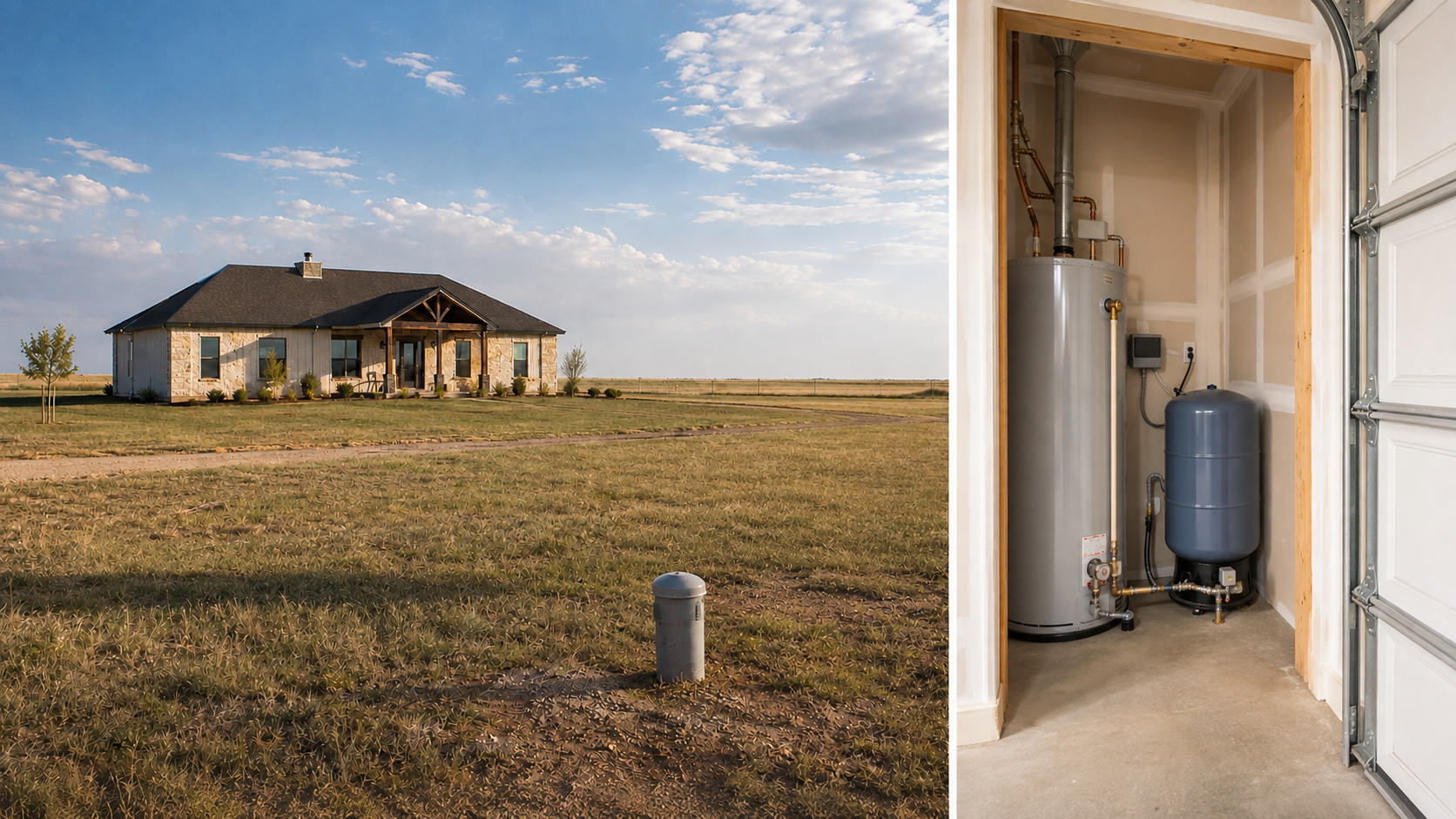
In simple terms, a well is drilled into the ground deep enough to reach groundwater. A pump brings that water into the home, and a pressure tank helps maintain steady water pressure when you turn on a faucet, run the washing machine or take a shower.
Some properties also have filters, water softeners or other treatment equipment, depending on the water and the homeowner’s preferences.
You do not need to understand every mechanical detail to buy a home with a well. You do need to understand that the homeowner—not the city—is responsible for the well, pump, water quality, repairs and ongoing maintenance.
Water Testing Should Be Part of Your Inspections
At a minimum, I recommend that a buyer have the well water tested before purchasing the property. This is something a home inspector or well inspector can typically collect and coordinate.
Clear water is not necessarily safe water. Things that can affect water quality cannot always be seen, smelled or tasted. Testing gives you actual information instead of relying on appearance or being told that the water has always been fine.
The two main things we typically test for in our area are:
- E. coli
- Total coliform bacteria
If you want to test for additional substances or have concerns based on the property’s location, nearby land use, plumbing or water quality, the sample would generally need to be sent to a specialized laboratory.
The sample should be collected and handled correctly to produce a reliable result. That is another reason it is helpful to have your home inspector or well inspector take care of it during the inspection period.
A water test is a snapshot of the water quality on the day the sample is collected. It does not tell you whether the pump is near the end of its life or whether the well can produce enough water for the household.
That is why water testing should be part of the inspection process, but not necessarily the only evaluation of the well.
Water Quality and Water Supply Are Two Different Questions
When evaluating a well, buyers should think about two separate issues:
- Is the water suitable to use and drink? Water testing for E. coli and total coliform helps answer this question.
- Can the system reliably provide enough water for the home? A well inspection and flow test can help answer this question. (This would need to be completed by a qualified Well Inspector)
A qualified well professional can examine the visible components, such as the wellhead, pump controls, pressure tank, wiring and piping. A flow test can provide information about how much water the well produces and whether it recovers properly during use.
This matters because a home can have water that tests well but still have poor pressure, an aging pump or limited production. It could also have a strong-producing well but need water treatment.
One test does not replace the other.
Make Sure the Well Really Serves Only This Property
One of the most important questions to ask is whether the well serves only the property you are buying.
The phrase “private well” can be misleading. It may mean the home is not connected to a public utility, but it does not always mean the well is used by only one property. Some rural properties share a well with a neighboring home, parcel or structure.
Do not assume. Verify:
- Where the well is physically located
- Whether it sits inside the property boundaries
- Which homes, buildings or parcels receive water from it
- Whether any water lines cross adjoining property
- Who pays for the electricity that powers the pump
- Whether anyone else has a right to access, use or maintain the well
My preference for a buyer is to know up front that the well is located on the property and serves that property alone.
If the well is shared, it does not automatically end the conversation, but it creates additional questions that need to be resolved before closing.
A shared-well agreement should clearly address access, water usage, electricity, maintenance, repairs, cost sharing and what happens if the well fails. The title company and lender should be told about the arrangement early, and the buyer may need an attorney to review the agreement.
A handshake between neighbors is not enough protection for something as essential as the home’s water supply.
Ask for the Well’s Records
The seller may not have every record, especially if the well is older, but buyers should ask for whatever is available:
- The original drilling or well report
- The approximate age and depth of the well
- The age of the pump
- Maintenance and repair invoices
- Previous water-quality test results
- Information about filters, softeners or treatment systems
- Any easements or shared-well agreements
Texas maintains databases of submitted well reports, although the correct record is not always easy to locate, and records for older wells may be stored differently.
A well report may include helpful information about when the well was drilled, its depth and how it was constructed.
Who Is Responsible After Closing?
Once you own the property, you are generally responsible for monitoring the well and its water quality. Private well owners do not receive the same routine testing and oversight that comes with a public water system.
Routine testing gives the homeowner a baseline and can help identify changes in the water. Additional testing may be appropriate after flooding, well repairs, a noticeable change in taste or odor, or another condition that could affect the water.
Owning a well also means budgeting for eventual maintenance and repairs. Pumps, pressure tanks and treatment equipment do not last forever.
That is not necessarily different from budgeting for a roof, HVAC system or septic system. It is simply another part of owning a rural property.
A Simple Private-Well Checklist for Buyers
Before buying an Amarillo-area property with a private well:
- Confirm the well’s physical location.
- Verify whether it serves only this property.
- Review any easements or shared-well agreements.
- Include water testing for E. coli and total coliform in your inspections.
- Consider a professional well inspection and flow test.
- Request available drilling, maintenance and repair records.
- Ask the lender early about any loan-specific testing or inspection requirements.
What If You’re Selling a Property With a Well?
If you are preparing to sell an acreage property with a private well, gathering the well report, repair records, recent water-test results and any shared-well agreements before listing can help answer buyer questions and prevent avoidable delays.
Knowing exactly where the well is located and which structures or properties it serves can also help avoid surprises once the buyer begins inspections and title work.
The Bottom Line
A private well does not have to make buying an acreage property intimidating. The biggest mistake is treating it like a city water connection and assuming that water coming from the faucet is all you need to know.
Test the water. Evaluate the system. Confirm who owns and uses the well. Review the records that are available.
Those steps can help you understand the property before it becomes your responsibility.
Whether you are buying an acreage home or preparing to sell one in the Amarillo, Canyon or Bushland area, I can help you understand the well, septic and other rural-property details that may affect the transaction.
Haley Sutter, REALTOR®
Brokered by 2015 Real Estate
Check out this article next