

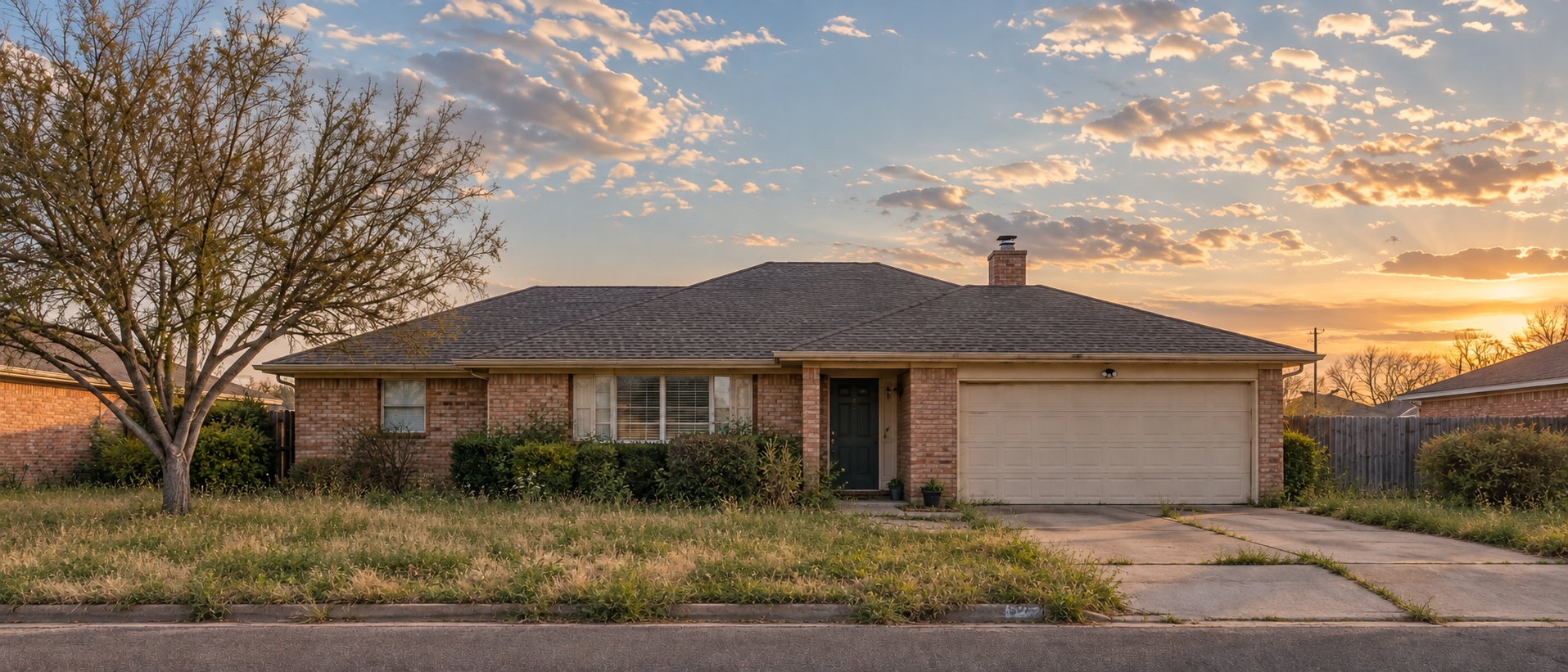
You are scrolling through homes online and spot one marked “pre-foreclosure.” The estimated value looks higher than the number on the screen. You imagine walking through it this weekend, making an offer, and getting a great deal.
There is one big problem: the homeowner may not be selling the house at all.
Pre-foreclosure is a stage in a mortgage problem, not a type of active real estate listing. If you are hoping to buy one in Amarillo, here is what that label actually tells you—and what it doesn't.
What is a pre-foreclosure home?
In everyday real estate searches, “pre-foreclosure” generally means public records or other data suggest a homeowner is behind on a mortgage and the property could eventually face a foreclosure sale. The exact label and timing depend on the website and the information it has received.
The owner still owns the house. The lender has not necessarily taken it back, the homeowner may resolve the mortgage problem, and the home may never be offered for sale. Even Zillow says a property shown as pre-foreclosure is not necessarily for sale.
That distinction matters. An online estimate, an old photo, or an auction date is not an invitation to enter the property or schedule a showing. The homeowner decides whether to sell before foreclosure.
Why is a pre-foreclosure so hard to buy?
1. The homeowner may have no interest in selling
They may be working with their mortgage servicer, trying to catch up, considering other options, or simply not ready to discuss the property. A buyer cannot force a private sale just because a public record or website flagged the address.
2. You usually cannot tour it like an active listing
If the home is not listed, there may be no photos, lockbox, showing instructions, or agent with access. Do not walk onto the property or attempt to look inside without permission. If the homeowner chooses to sell, a showing can be arranged with their consent; until then, online interest does not create a right to inspect their home.
3. The numbers may not support a “deal”
The amount of missed payments is not the purchase price. The owner may have a substantial mortgage balance, other liens, closing costs, or enough equity to justify a normal market price. If a proposed sale will not pay off what must be paid at closing, lender approval or another solution may be needed. A low number on a website does not tell you what the homeowner can or will accept.
4. Timing is uncertain
A scheduled foreclosure sale can be postponed or canceled. On the other hand, a short timeline may leave little room to negotiate, confirm payoff amounts, arrange financing, review title, and close. “I can buy it quickly” only helps if the owner wants to sell and the transaction can actually be completed in time.
Can you inspect a pre-foreclosure home?
Sometimes—if you are buying directly from a willing homeowner. If they put the home on the market or agree to a private sale, the parties can negotiate access, an option period, and inspections much like other Texas home sales. The owner could also decline certain inspection terms; it depends on the agreement.
The situation changes at a foreclosure auction. Auction buyers commonly cannot tour or inspect the interior before bidding. Auction.com, for example, states that interior access is unavailable for the foreclosure-auction properties it markets. You may be bidding without knowing the condition of the roof, HVAC, plumbing, foundation, or even whether the home is occupied. That is a very different risk from buying a listed home with an inspection period.
Pre-foreclosure, auction, and bank-owned are three different stages
| Stage | Who controls the sale? | Can you normally see inside? |
|---|---|---|
| Pre-foreclosure | The homeowner decides whether to sell before an auction. | Only with the owner's permission; a negotiated sale may allow inspections. |
| Foreclosure auction | The trustee conducts a public sale under the applicable process. | Often no interior access or inspection before bidding. |
| Bank-owned, or REO | If the lender acquires the home, it may later market the property for sale. | Access and inspection terms depend on the eventual listing and contract. |
These labels get mixed together online, but they describe different ways to buy—and different levels of risk. “Foreclosure” does not automatically mean “cheap,” and “pre-foreclosure” does not mean “available.”
What should a buyer do instead?
Start with the actual status of the property. Is it actively listed? Is an auction scheduled? Is the owner interested in selling? Then look at access, title, financing, occupancy, and inspection opportunities before deciding whether the price makes sense.
If you want a home you can tour, inspect, and finance with a typical mortgage, an actively listed property—including a bank-owned home that has been listed—may fit you better than a courthouse auction. If you are seriously considering an auction, understand its rules and risks before bidding.
For buyers I work with in Amarillo, Canyon, and Bushland, the first steps are a buyer consultation and a pre-approval letter or proof of funds. That helps us focus on properties you can realistically purchase instead of chasing an online label that may never become a listing. Here is how my buyer process works.
If your own home is in pre-foreclosure
You may have more options than an online property label suggests. Contact your mortgage servicer promptly to ask what help is available. If selling is the right choice, the amount owed, the home's value, and the time remaining will shape your options. A traditional listing or a legitimate cash offer may be worth comparing, but no buyer or agent can promise to stop a foreclosure simply by making an offer.
You deserve clear numbers and a plan, not pressure from strangers who saw your address online. If you own a home in the Amarillo area and want to talk through a possible sale, let's discuss your options privately.
This article is general real estate information, not legal, lending, or foreclosure advice. The facts and deadlines for a particular property matter; speak with your mortgage servicer, lender, title company, or an attorney as appropriate.
Check out this article next