


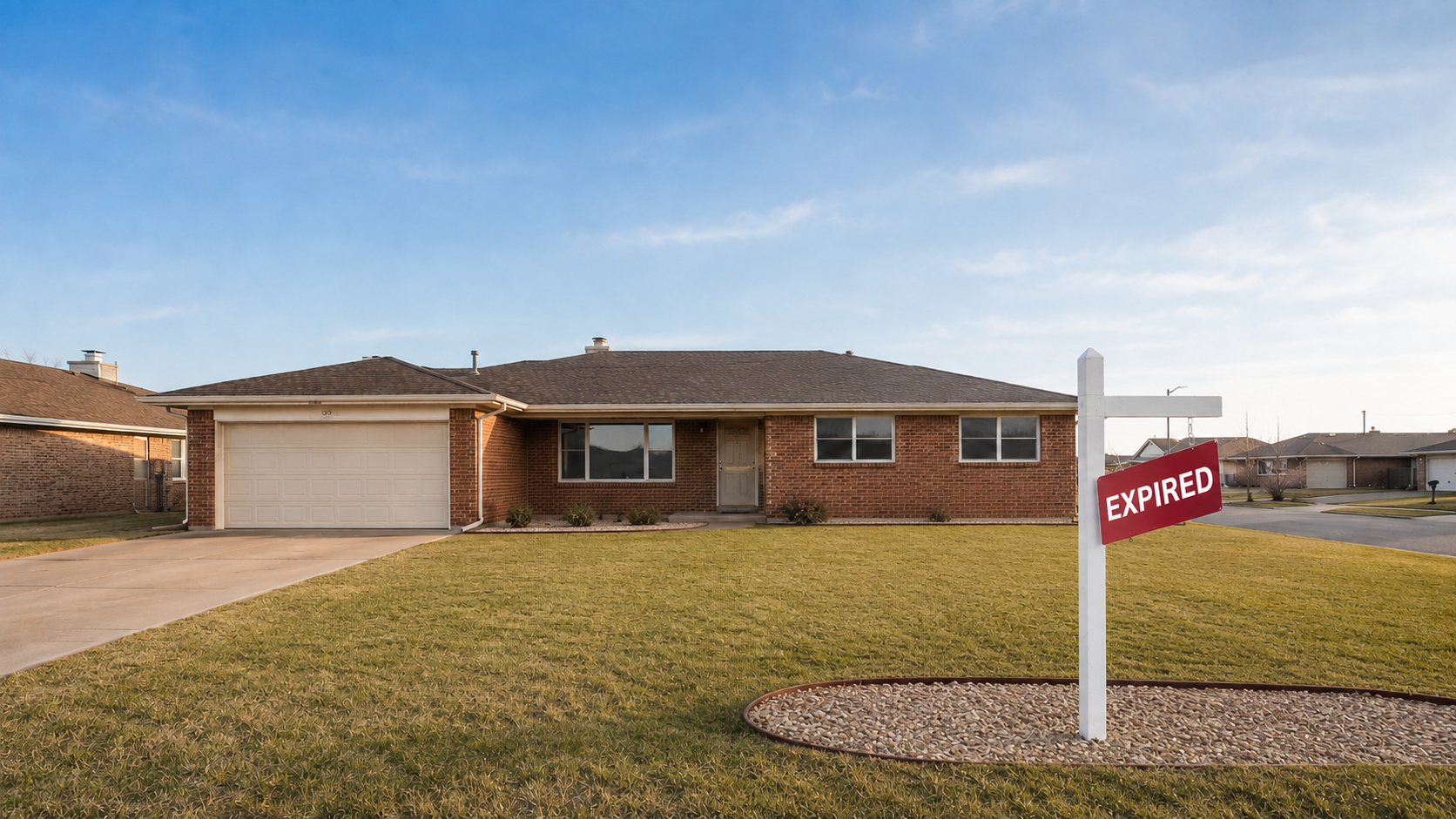
Expired Listing in Amarillo: Should You Relist, Wait, Rent It, or Sell As-Is?
When you listed your house, you probably expected the process to end with a buyer and a closing date—not an expired listing.
Instead, you may be left with months of showings, price discussions and uncertainty, only to end up right back where you started. That is frustrating, especially if you still need to sell because of a move, financial pressure, an inherited property, divorce or another major life change.
An expired listing does not mean your house cannot sell. It means the first plan did not produce the result you needed within the listing period.
The most important thing now is not to rush into repeating the same plan. Before putting the property back on the market, take an honest look at what happened, what the market told you and which option best fits your situation now.
What Does It Mean When a Real Estate Listing Expires?
A listing expires when the agreed-upon term in the listing agreement ends before the property sells. Once that term ends, the home is no longer actively listed under that agreement unless you and the brokerage extend it or enter into a new agreement.
An expired listing is different from a withdrawn or canceled listing. Those statuses can involve different circumstances, so review your listing agreement and confirm the property's status before making your next move.
Whatever the status says, the practical question is the same: Do you still want or need to sell?
If the answer is yes, the next step is not automatically “put it back on the market.” The next step is figuring out why the first attempt did not work and deciding what needs to be different this time.
Start With the Information From the First Listing
Before deciding whether to relist, gather the information the first listing produced. Even without a sale, the market gave you feedback.
Look at:
How many showings the property received
Whether showing activity slowed after the first few weeks
What buyers and agents repeatedly said about the home
Whether the listing received online views, saves or inquiries
How the home compared with similar properties that sold
Whether competing homes offered better condition, features or value
Any price changes and whether they improved activity
Any offers received and why they did not come together
How often showing requests were declined or difficult to accommodate
How the property was presented and marketed online
One comment from one buyer may not mean much. A repeated pattern deserves attention.
For example, if several buyers thought the home needed too much work for the price, that is useful information. If the listing received very few showings from the beginning, the issue may have been price, online presentation, exposure or a combination of all three. If buyers liked the house but repeatedly chose updated competition, the property's position in the market may need to change.
The goal is not to assign blame. The goal is to understand what prevented buyers from moving forward.
For a deeper explanation of the factors that influence buyer activity, read Why Some Amarillo Homes Sell Fast and Others Sit.
Option 1: Relist the Home With a New Strategy
Relisting may be the right choice if you still need to sell and the property can be positioned competitively. But a new MLS number by itself is not a new strategy.
Buyers and real estate agents may still be able to see the property's listing history. If the photos, price, condition, remarks and marketing remain essentially the same, the market may respond the same way.
Before relisting, decide what will be different.
Pricing and positioning
Price is not determined by how much you owe, how much you spent on improvements or how much you need for your next move. Buyers compare your house with the other choices available to them.
That does not mean you should automatically make a large price reduction. It means the price must make sense for the home's condition, location, features and current competition.
Sometimes the original price was reasonable, but the presentation or marketing did not support it. Other times, the house was marketed well but buyers consistently chose better options at the same price. Both situations require an honest review.
Presentation and photos
If the property did not show well online, relisting gives you an opportunity to correct that. New professional photos, better lighting, less clutter, improved curb appeal and stronger listing copy can change the first impression.
Do not assume buyers will schedule a showing to discover what the pictures failed to communicate. Most buyers make their first decision while looking at the listing online.
Condition
You do not have to remodel the entire house before selling it. However, repairs, odors, deferred maintenance and unfinished projects can affect both buyer interest and the price buyers are willing to pay.
The right approach might be making a few targeted improvements. It might also be selling the property in its current condition while adjusting the price and marketing to match. The important thing is that the strategy accounts for the condition honestly.
Showing access
Buyers cannot purchase a home they cannot see. Very limited showing windows, repeated declines, difficult access or a home that is rarely ready for showings can reduce your chances of receiving an offer.
If your schedule or living situation makes showings difficult, discuss that before relisting so the plan is realistic.
Marketing
Relisting should include more than placing the home back in the MLS. Ask what will happen during the launch, how the property will be presented, where it will be advertised, how buyer inquiries will be handled and how the strategy will be adjusted if activity is slower than expected.
If you are ready to relist, learn more about my Amarillo home-selling strategy.
Option 2: Wait and Prepare Before Relisting
Sometimes the best decision is to pause.
Waiting may make sense if the home needs repairs, the property was not ready for photos, your schedule made showings difficult or you need time to make decisions without the pressure of an active listing.
A pause should have a purpose. Simply waiting a few weeks and returning with the same price, photos and plan usually does not solve the underlying problem.
Use the time to:
Complete the repairs that affected buyer interest
Declutter, clean and improve presentation
Resolve ownership, title or estate-related issues
Review competing listings and recent sales
Arrange a more flexible showing plan
Prepare new professional photography and marketing
Decide what you are willing to adjust if the market responds slowly
The right preparation can make the next launch stronger. You can also use my Seller's Guide to review the steps that help a home show and market well.
Option 3: Keep the Property and Rent It
If selling is not urgent, renting the property may be worth considering. This can be a practical option when the expected rent supports the property's expenses and you are prepared for the responsibilities of being a landlord.
Before choosing this route, consider:
Expected monthly rent
Mortgage, taxes, insurance and maintenance
Vacancy and repair costs
Property-management expenses
Whether your insurance and financing allow the change
The home's condition and readiness for tenants
Whether you actually want to manage a rental property
How becoming a landlord affects your future financial plans
Renting is not automatically easier than selling. It replaces one set of decisions with another. Run the real numbers and speak with the appropriate financial, insurance and tax professionals before relying on projected rent.
Option 4: Sell the Property As-Is
If the house needs work—or you simply do not want to make repairs—you may still be able to sell it as-is.
An as-is sale does not always mean selling directly to an investor. Depending on the property, price and condition, it may be possible to list the home publicly while making its condition clear and allowing buyers to evaluate it.
For sellers who prioritize speed, convenience and certainty over maximizing the sale price, a direct cash offer may also be an option. A cash buyer will generally account for repairs, holding costs and resale risk when calculating the offer, so the number will typically be lower than a successful full-market sale.
The tradeoff may be worthwhile when the seller needs:
A faster closing
No repairs or cleanup
Fewer showings
A more predictable timeline
Help with a distressed or inherited property
A solution for a home that may be difficult to finance traditionally
The right question is not simply, “Which option pays the most?” It is, “Which option gives me the best overall outcome for my timeline, property and priorities?”
You can compare both paths on my Amarillo cash-offer and traditional-listing page.
Should You Relist With the Same Agent or Choose Someone New?
There is no single correct answer.
If you had good communication, understood the strategy and believe the agent responded appropriately to the market, extending or relisting with the same agent may make sense.
If you did not understand what was being done, received little communication or do not believe there is a clear plan for the second attempt, it may be time to interview other agents.
Instead of focusing only on promises, ask specific questions:
Why do you believe the home did not sell?
What evidence supports that conclusion?
What would you change before relisting?
How would you position the property against current competition?
What preparation do you recommend?
What will the marketing launch include?
How will buyer inquiries and feedback be handled?
How often will we review activity and strategy?
What happens if the home is not receiving showings or offers?
Do you have experience selling homes that previously failed to sell?
You should leave that conversation understanding the plan—not just hearing that the agent is confident.
Do Not Relist Until You Know What Will Change
The most expensive mistake after an expired listing is treating the second attempt like a reset button.
It is not enough to wait a few days, change agents, choose a slightly different price and hope for a different result. The relaunch needs to reflect what buyers told you the first time.
That could mean:
A more competitive price
Better preparation
New professional photos
Stronger marketing
Easier showing access
Clearer communication
A different buyer strategy
A realistic plan for repairs or an as-is sale
Not every item needs to change. The right items do.
My 90-Day Sale Program for Amarillo-Area Homeowners
For sellers who are ready to follow a clear pricing, preparation, showing and marketing plan, I offer a 90-Day Sale Program for qualifying Amarillo-area properties.
The program is built around getting the home properly prepared, professionally presented, competitively positioned and actively marketed from the beginning. It is not designed for homeowners who want to test an unrealistic price or make the property difficult to show. The details and property requirements matter.
If your listing expired and you still need to sell, you can review the program at AmarilloSoldIn90Days.com.
Your Listing Expired. That Does Not Mean You Are Out of Options.
A failed first attempt can be discouraging, but it can also give us useful information. Once we understand how buyers responded, we can decide whether the best next move is to relist now, prepare and wait, rent the property or explore an as-is sale.
I have helped Amarillo-area homeowners sell properties in a wide range of conditions and circumstances, including homes that did not sell the first time. My job is to look at the property, the market and your actual goals, then give you a straightforward explanation of the available options.
You do not have to decide what comes next on your own. Start by reviewing what happened with the first listing, then build a plan that makes sense for your property and your situation.
Check out this article next